This guide helps you prepare the requirements for a transport proposal. It does not set a universal baggage allowance or promise the layout of any model.
Count the people who actually travel
Begin with the passengers on each movement, not the total number invited to an event. Include a guide, escort or additional organiser who needs a seat. Keep the driver separate when confirming usable passenger capacity.
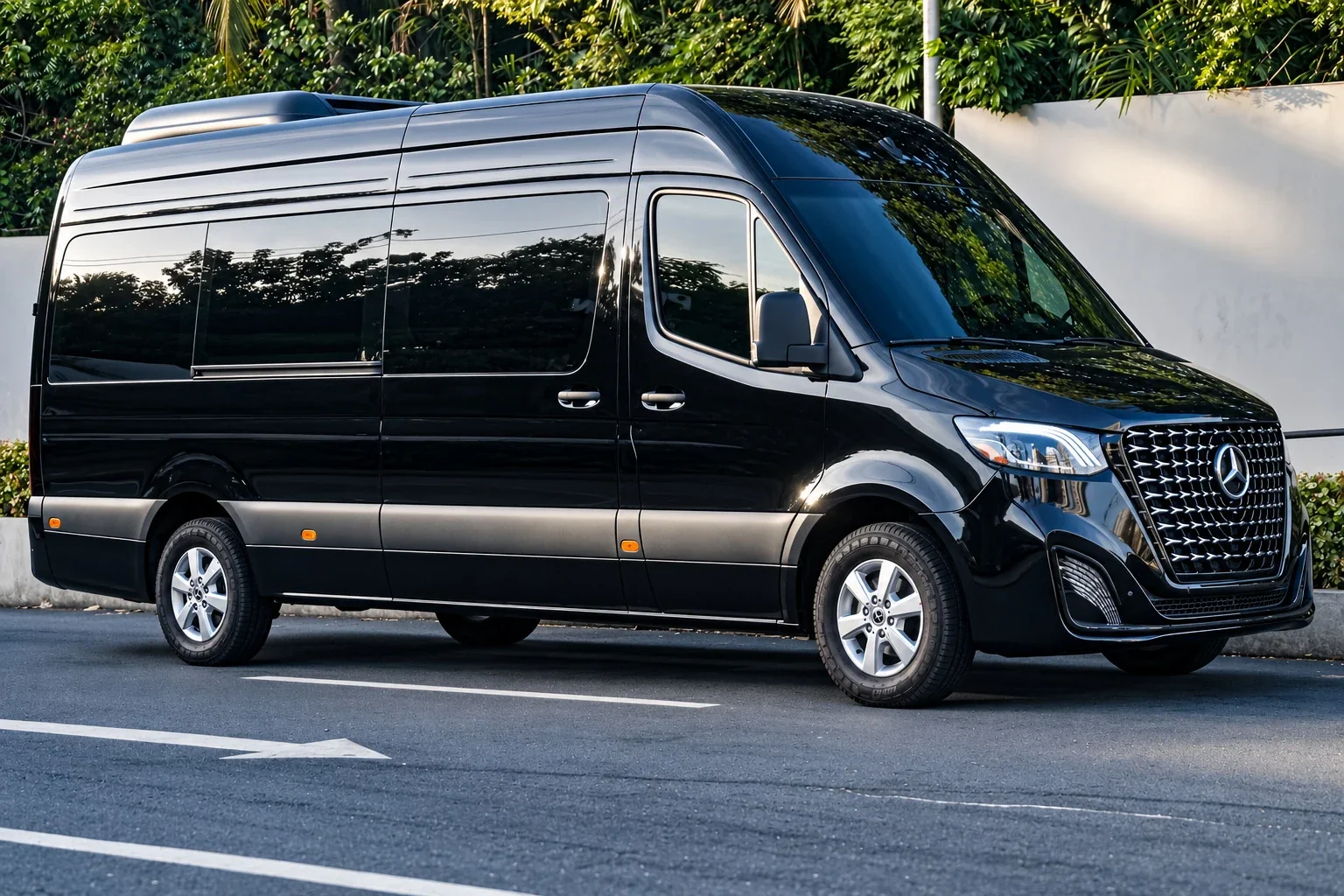
Category labels can be ambiguous. For example, clarify whether a quoted “9-seater” means nine usable passenger places or a total that includes the driver's seat. Do not resolve that question by guessing from a photograph or a manufacturer's model name.
The same group may have different requirements on different days. An airport arrival with everyone and their luggage is a separate capacity question from a hotel shuttle used by only part of the group.
Describe luggage so it can be assessed
“Normal luggage” is difficult to interpret. Provide numbers of suitcases and hand bags, plus approximate dimensions for items that matter: sports equipment, exhibition cases, musical instruments or folded mobility equipment.
A vehicle may have enough passenger seats without the confirmed space for every bag. A larger category or a different arrangement may be worth reviewing, but the proposal must confirm the actual solution. Never assume that luggage can use an aisle or a space needed for safe boarding.
Compare the requirements, not only category names
| Decision | Information to provide | What the proposal should confirm |
|---|---|---|
| Seats | All travellers needing a place | Usable passenger capacity, separate from the driver |
| Luggage | Quantity, size and oversized items | Space for the stated luggage, not a generic allowance |
| Boarding | Practical assistance or equipment requirements | The actual vehicle features and agreed assistance |
| Comfort | Amenities essential to your group | Confirmed features, rather than a model preference alone |
| Itinerary | Every leg and any waiting requirement | Suitability for the agreed route and service hours |
Silvabus's form includes executive, minibus and coach enquiry categories. Those choices express preferences; availability and specifications are confirmed in the offer. A larger vehicle is not automatically the better plan if the itinerary or access needs a different arrangement.
Keep mobility requirements specific and private
Describe the practical boarding or equipment requirement. For example, say whether a traveller needs to remain in a wheelchair during the journey or whether a folded chair must be carried. Do not assume that one arrangement implies the other.
Ask for the relevant vehicle features to be confirmed. An enquiry category does not establish accessibility. Send only information needed to plan the journey; medical records are not necessary for an initial transport brief.
Three examples: same question, different answer
These are planning examples, not recommended vehicle allocations. The right category depends on the actual usable seats, luggage space, route and confirmed vehicle specifications.
Example A: eight people meeting at an airport
Eight travellers may need space for eight large suitcases, eight cabin bags and extra equipment. A nominal passenger-seat count does not show whether those items fit. Send the flight number, the point at which the whole group expects to be ready, and the luggage list. See the Munich Airport group-transfer guide for a route-specific brief.
Example B: 30 delegates leaving from three hotels
A total of 30 delegates does not say how many board at each hotel, whether the vehicle can stop safely at each address, or whether two departures are needed. List each movement, passenger count and required arrival time first. The corporate event movement-plan guide includes an illustrative planning table.
Example C: 17 travellers on a multi-day tour
Seventeen occupied seats, a tour escort, overnight suitcases and a set of scenic stops may require different considerations from a short city shuttle. Give the itinerary by day, expected luggage quantity, desired waiting periods and any roads or properties with restricted vehicle access. Ask for the complete programme to be assessed, not only the longest journey.
What to confirm in the written proposal
- How many usable passenger seats are included, excluding the driver?
- Does the proposed vehicle have space for the stated luggage and oversized equipment?
- Are the pickup points, intermediate stops, operating hours and waiting periods included?
- Have any essential boarding or accessibility features been confirmed for the assigned vehicle?
- What changes, additional journeys or delays require a revised offer?
These questions are useful even when you leave the vehicle field as Please advise. A preference in the enquiry is not a guarantee of a particular model or capacity.
A brief you can reuse
Write a short requirement list for each movement:
- Passengers needing seats, including guides and escorts.
- Suitcases, cabin bags and larger items with dimensions where useful.
- Essential boarding features and any assistance to discuss.
- Pickup and destination, with stops in order.
- Required arrival or departure time and requested waiting.
- Preferred category and which preferences are essential.
Before booking, check the written proposal against that list. If the final passenger count or baggage changes, ask whether the confirmation still fits; an extra person can matter even when the route has not changed.
For a local programme, use coach and minibus hire in Munich. For intercity travel, see group journeys in Germany. You can also review the vehicle enquiry categories.
Send your group and luggage requirements. Submitting the form does not confirm a vehicle or booking.